|
|
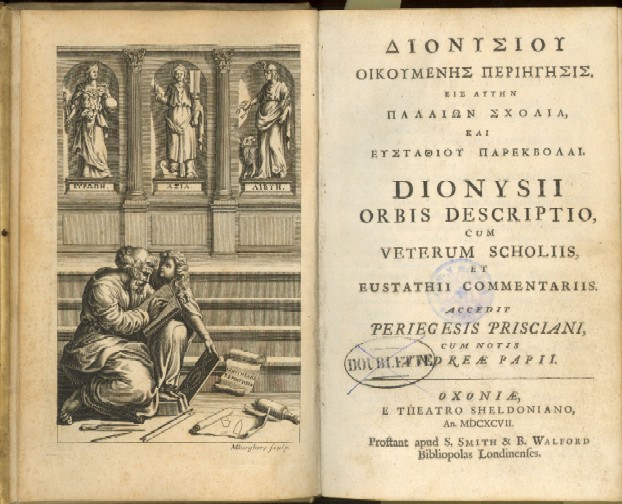
Dionysius's famous description of the world in 1186 Greek hexameters, with notes, commentary and a translation. In addition to imparting geographical knowledge, he wanted to acquaint the students with the great classical authors, notably Homer. He therefore composed his poem in hexameters, after Homer and also included many mythological place names. In this manner, the Description of the Inhabited World became a guided tour through the world of antique geography.
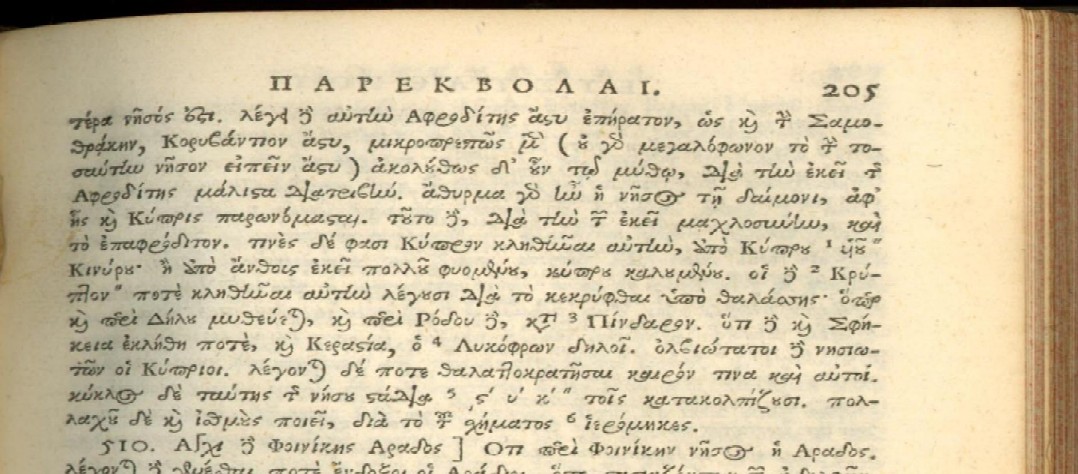
The present edition opens with an introduction by Gerard Vossius, followed by the Greek text with underneath a Latin translation and textual variants and Andreas Papius's notes in Greek, first published in 1575. The edition continues with Eustathius (d. c. 1198), archbishop of Thessalonica, who wrote a commentary on Dionysius which contains much material from lost writings by Arrian. The volume is concluded with a fifth century Latin translation of Dionysius by the grammarian Priscian. The present edition of Dionysius and his commentators was prepared by the anglo-saxon scholar Edward Thwaites (1667-1711).
The full-page map shows a picture of the world according to Dionysius and one according to Ptolemy. The folding maps depict Africa, Europe, Greece and Italy, and Asia.
Library stamps, hand-written ownership entry on inside front cover, endleaf and title-page. Very good copy with the paper still clean and crisp.